
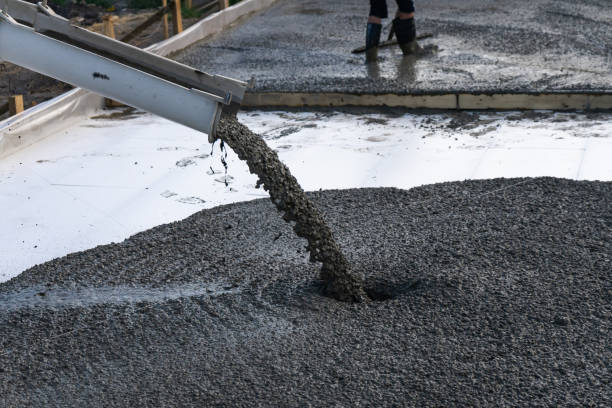
Thinking about a concrete project in Everett? Here’s a real look at costs, what shapes the price, and how to budget without nasty surprises.
So you’re thinking about pouring a new driveway. Or maybe a back patio. Or fixing that cracked walkway that’s been bugging you every time you walk to the mailbox. The first question that pops up is almost always the same one — how much is this going to cost?
We get asked this a lot. And the honest answer is, it depends. But that’s a frustrating answer when you’re trying to plan a budget. So we’re going to break things down today in plain numbers, share what we’ve seen on real Everett jobs, and give you a way to think about pricing that actually makes sense.
If you’re looking for a team that gives straight answers and fair quotes, North Cascades Concrete has been doing this kind of work across Washington for years.
Why Concrete Costs What It Does
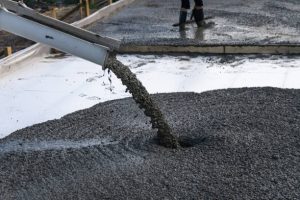
Let’s start with the basics. Concrete pricing is not pulled out of thin air. It comes from a few real things that add up.
First, there’s the material itself. Concrete is mixed from cement, sand, gravel, and water. Cement prices have climbed steadily over the past few years. According to the U.S. Bureau of Labor Statistics, ready-mix concrete prices rose about 12% between 2021 and 2023. That cost gets passed down the line.
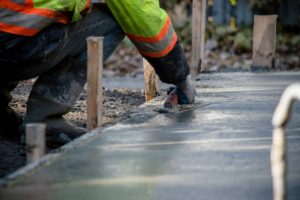
Second, there’s labor. A good concrete crew works hard, fast, and in tough weather. Around Everett, where we deal with rain a lot of the year, scheduling matters. Pouring on a dry day with the right temperature is half the battle.
Third, there’s the site itself. Is it flat? Easy to reach with a truck? Already cleared of grass and old concrete? Each of these things shifts the price up or down.
Have you ever gotten a quote that felt sky-high and wondered why? Usually it’s one of those three things.
A Real Cost Range for the Everett Area
Here’s a quick table we put together based on jobs we’ve done across Snohomish County over the last couple of years. These are ballpark figures, not promises.
| Project Type | Typical Size | Cost Range |
| Driveway (plain) | 600 sq ft | $4,200 – $7,500 |
| Driveway (stamped) | 600 sq ft | $7,800 – $13,000 |
| Patio (basic) | 300 sq ft | $1,800 – $3,900 |
| Patio (decorative) | 300 sq ft | $3,600 – $7,200 |
| Walkway | 100 sq ft | $700 – $1,400 |
| Garage floor | 400 sq ft | $2,400 – $4,800 |
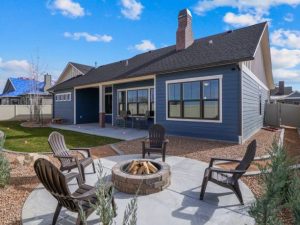
A patio is one of the most common jobs we do for Everett homeowners. Folks want a clean spot for a grill, some chairs, maybe a fire pit. A simple poured slab does the trick. But if you want stamped or colored finishes, the price climbs because there’s more labor involved.
What Shapes the Price the Most
Here are the things that move the needle on a quote, in our actual order of impact:
Site prep. If we have to tear out an old slab, dig down further, or haul in fill dirt, the cost jumps. Removal alone can add $1,500 to $4,000 depending on what’s there.
Slab thickness. A standard residential slab is four inches thick. A driveway that needs to hold a heavy truck or RV might need six inches. That’s 50% more concrete right there.
Reinforcement. Rebar or wire mesh adds strength but also adds cost. For most homes in Everett, we strongly suggest it. Skipping it saves a few hundred bucks now and costs you thousands in cracks later.
Finish type. Smooth troweled, broomed, stamped, stained, polished — each one takes different time and skill. Stamped concrete might run $12 to $18 per square foot, while a plain broom finish might be $7 to $10.
Access to the site. If our truck can pull right up to the pour spot, things go fast. If we have to wheelbarrow concrete 100 feet around the house? That doubles the labor time.
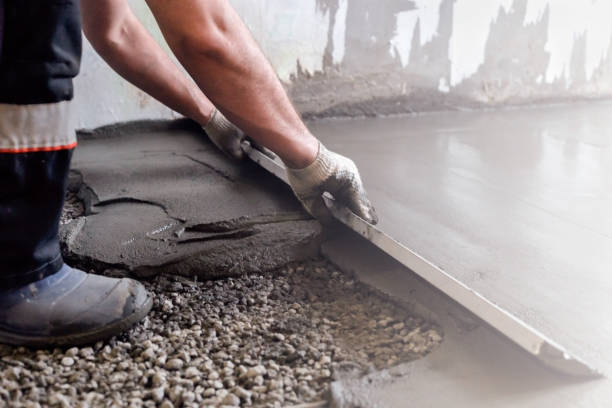
The Everett Climate Factor
We can’t talk about concrete in this area without talking about the weather. Everett gets around 38 inches of rain a year. That’s a lot of moisture for concrete to deal with.
Wet weather affects two things — when we can pour, and how long the concrete needs to cure properly. Concrete that gets rained on within the first few hours can have a weak surface. Concrete that freezes before it sets can crack badly.
This is why we usually plan pours for spring through early fall around here. We also keep a close eye on overnight temperatures from October onward.
If you want to work with a crew that knows our local weather patterns, Trusted Concrete Contractor in Everett Area is the kind of help you want on your side from quote to cleanup.
A Story That Stuck With Us
A few summers back, a homeowner near Silver Lake called us out for a second opinion. Another company had quoted her $14,000 for a new driveway. She thought that sounded high but wasn’t sure.
We went out, measured, looked at the slope, and saw the issue right away. The other quote didn’t include removing the old asphalt sitting underneath the gravel. They were planning to pour right over it. That would have meant cracks within two winters.
Our quote came in at $11,800 — but with the asphalt removal included. She went with us. Three years later, that driveway still looks new. Saved her about $2,200 upfront and probably $8,000 in future repairs.
The cheapest quote isn’t always the best deal. Sometimes the higher one is actually saving you money down the road.
Smart Ways to Save Without Cutting Corners
We’re not in the business of pushing people into the biggest possible project. There are real ways to bring costs down without making bad choices.
- Pick a simple finish instead of stamped or stained
- Schedule your job for early spring when crews have more open slots
- Combine projects (patio plus walkway plus driveway) into one pour day
- Do your own demo work if you have the time and tools
- Pour a slightly smaller footprint than your first plan
That last one surprises people. Going from a 16×20 patio to a 14×18 patio cuts the cost by about 22%. And honestly, most homeowners barely notice the size difference once the furniture is on it.
What a Fair Quote Should Include
When you get a written estimate, it should spell out clear things. Total square footage, slab thickness, reinforcement type, finish style, and a line for cleanup and haul-away. If a quote is just one number with no breakdown, ask for more detail. A good contractor won’t mind.
Wrapping It Up
Concrete work is one of those home projects where the upfront cost stings a bit, but the payoff lasts decades. A well-poured driveway can sit there working hard for 30 to 50 years with basic care. The trick is getting clear on what you actually need, asking for itemized quotes, and picking a crew that won’t cut corners on prep work or curing time. Take your time with the planning stage. If you want a fair quote and honest advice for your Everett project, the Best Concrete Contractors Near Me in Everett Area are ready to walk the site with you.
FAQs
How long does a concrete project usually take from quote to finish? Most residential concrete jobs in Everett take two to four weeks from signing the quote to the finished pour. That includes scheduling, permitting if needed, demo work, prep, and the pour itself. The concrete then needs about a week before light foot traffic and 28 days before full strength. Weather can stretch the timeline a bit, so we always build in some flex.
Can I pour concrete myself to save money? Small slabs like stepping stones or a tiny pad for a trash bin? Sure, with the right tools and some prep. Anything bigger gets tricky fast. Mistakes with mixing, leveling, or finishing show up within a year as cracks, pits, or sinking corners. The money saved on labor often gets eaten up by repairs and tool rentals. Most homeowners come out ahead hiring a crew for jobs over 100 square feet.
Will my new concrete crack? All concrete cracks at some point — that’s just the nature of the material. The goal is to control where and how it cracks. Good crews cut control joints into the slab so any cracking happens along those clean lines instead of randomly across the surface. With proper prep, reinforcement, and curing, you can expect a clean look for many years before any visible damage.
Do I need a permit for concrete work in Everett? It depends on the project size and location. Driveways often need a permit, especially if they affect drainage or the right-of-way near the street. Patios and walkways inside your yard usually don’t need one. We always check with the city for each job and handle the paperwork if it’s required. Don’t skip this step — fines and forced removal are real risks.
What’s the difference between concrete and cement? People mix these words up all the time. Cement is one ingredient. Concrete is the final material that includes cement, sand, gravel, and water mixed together. Think of cement like flour, and concrete like the finished bread. So when someone says “cement driveway,” they almost always mean a concrete driveway.