
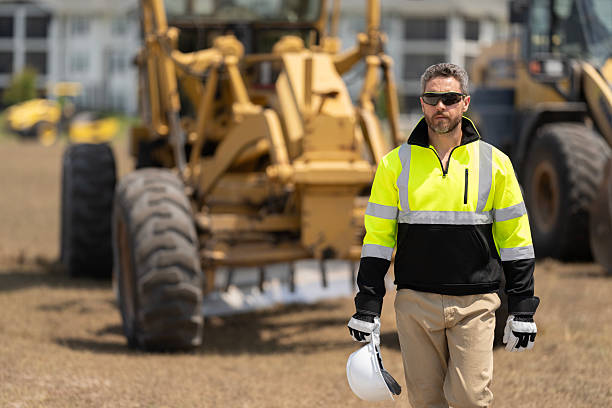
Hiring a commercial general contractor in Eastern Washington? Use this honest checklist to pick the right team without costly mistakes.
Building a commercial property is a big deal. We’re talking months of planning, big money on the line, and a finished space that needs to work for your business for decades. So picking the right general contractor is one of those choices you really can’t get wrong.We’ve been on enough job sites across Eastern Washington to know what separates a good GC from a bad one. And honestly? A lot of the warning signs show up before the first shovel hits the dirt. You just need to know what to look for.
That’s what this checklist is about. No fluff, no sales pitch — just the questions and steps that actually matter when you’re hiring a commercial general contractor in this part of the state. If you want to see how a local crew handles it, North Cascades Concrete has been working on commercial and residential builds across Washington for years.
What a Commercial General Contractor Actually Does
Quick reset on the job itself, since some folks aren’t sure where a GC’s role starts and ends.
A general contractor runs the whole show on a build. They hire and manage the subs — concrete crews, framers, electricians, plumbers, roofers, the whole list. They pull permits. They keep the schedule moving. They handle the money flow between you, the bank, and the trades. They show up when inspectors come out.
On a commercial job, the stakes are higher than a residential build. There’s more code involved, more inspections, tighter timelines tied to lease starts or business openings. A GC who’s good with houses isn’t always ready for a 20,000-square-foot warehouse. That’s why this checklist matters.
The Checklist: 10 Things to Verify Before Signing
Here’s the list we’d run through ourselves if we were hiring a GC for a commercial project. Go through it in order.
1. Active Washington State Contractor License
Every GC in this state needs to be registered with the Department of Labor & Industries. The license number should be on every quote, contract, and invoice. You can look it up free on the L&I site in about 30 seconds. No license, no further talk.
2. Bonded and Insured at Commercial Levels
A residential GC might carry $12,000 in bonding. For commercial work, you want way more — usually a $1 million general liability policy at minimum, plus a higher bond. Ask for current certificates, not photocopies from two years ago.
3. Proof of Past Commercial Projects
Anyone can say they do commercial work. Ask for three to five recent commercial jobs in Eastern Washington with addresses and owner contacts you can actually call. A real GC will hand this over without flinching.
4. Local Familiarity with Codes and Inspectors
Eastern Washington has its own pace. Spokane, Tri-Cities, Wenatchee, Yakima — each county and city has its own building department habits. A GC who works mostly in Seattle won’t know the local inspectors or which permit office takes three weeks vs three days.
5. Clear Written Estimate with Line Items
Get an itemized quote, not a single big number. Concrete, framing, mechanical, electrical, finishes — each should have its own line. Vague quotes are how budgets blow up later.
6. Realistic Timeline
A good GC will give you a schedule with phases and dates, not a hand-wave like “about four months.” Ask what happens if a sub falls behind. Ask what the rain plan is. If they laugh off these questions, that tells you something.
7. Subcontractor Relationships
The strongest GCs work with the same trusted subs over and over. That means crews who’ve poured concrete together for years, framers who know the GC’s standards. Ask who their concrete sub is. Ask how long they’ve worked together.
8. Communication Style
You’re going to talk to this person two or three times a week for months. Do they call back the same day? Do they answer texts? Do they show up on time for the first walkthrough? First impressions are usually the real ones.
9. Payment Schedule That Makes Sense
A fair payment plan ties money to work completed, not a calendar. Watch out for GCs who want big payments up front before any work happens. A standard structure might look like 10% down, then progress payments at framing, mechanical, drywall, and final.
10. Written Warranty
What does the GC cover after handoff? For how long? A solid commercial warranty runs at least one year on workmanship and longer on specific items like the roof or foundation.

Quick Reference Table
Here’s a side-by-side that might help when comparing two or three contractors:
| Item | What to Ask | Red Flag |
| License | “What’s your L&I number?” | Hesitation or “I’ll send it later” |
| Insurance | “Can I see current COI?” | Old or expired certificates |
| References | “Three recent commercial jobs?” | Only residential examples |
| Estimate | “Line-item breakdown?” | One big lump sum |
| Timeline | “Phase-by-phase schedule?” | “Should be quick” answers |
| Payment | “What’s the draw schedule?” | Large upfront payment demand |
A Story from a Job Near Moses Lake
A business owner reached out to us last year about a warehouse expansion. He’d already signed with another GC, paid 30% down, and the project was three months behind with maybe 15% of the work done. Sound familiar? It happens more than people think.
We looked at the contract. No itemized scope. No phase schedule. The other GC had taken his money and spread crews across too many other jobs. The original quote was lower than three other bids he’d gotten — which is what pulled him in.
Cheap quotes that aren’t backed by a real plan are how people lose six figures. He eventually got out of that contract, but it cost him another $40,000 in legal fees and lost lease income. Now he tells everyone he meets the same thing — get the cheapest of three good bids, never the cheapest of seven.
Why Eastern Washington Is Different
This part of the state has its own rhythm. Long, hot, dry summers and real cold winters. According to the Washington State Department of Commerce, commercial construction in Eastern Washington grew about 8% year over year in recent reports — driven by ag, light manufacturing, and warehousing. That growth means more contractors are hanging out shingles, including some who shouldn’t be.
A GC who knows this area plans concrete pours around freeze windows. They factor in dust control for the dry months. They know which suppliers stock what in Spokane vs Yakima. These small things shave weeks off a project. For real local help, Trusted Commercial General Contractor in Eastern Washington is the kind of service that gets the regional stuff right from day one.
Two More Stats Worth Knowing
The Associated General Contractors of America reported that 91% of commercial construction firms have had project delays from labor shortages in recent years. That’s nearly every job. Pick a GC with a deep bench of subs, not a thin roster.
The U.S. Census Bureau also pegs commercial construction costs as having jumped roughly 35% from 2020 levels in many western states. Older quotes from a GC don’t reflect today’s real pricing. Get fresh numbers.
Wrapping It Up
Hiring a commercial general contractor is a long-term decision, not a quick one. The right GC saves you headaches, money, and time across the whole build. The wrong one costs you all three. Use this checklist as a real filter — not just a comfort exercise. Ask hard questions, check the paperwork, call past clients, and trust your gut on communication style. When you want a local team that handles everything from concrete to full new builds, the Best General Contractor Services in Eastern Washington are ready to walk through your project plans.
FAQs
How long does a commercial general contractor project usually take? A small commercial build like a retail space or office under 5,000 square feet might run four to six months. A larger warehouse or mixed-use project can easily stretch to 12 to 18 months. Permits, weather, and supply chain issues all push these numbers around. A good GC builds buffer time into the schedule instead of promising tight dates they can’t hold.
What’s the average cost per square foot for commercial construction in Eastern Washington? Numbers swing a lot based on the building type, but most commercial jobs in this region run between $180 and $300 per square foot for standard builds in recent years. Specialized spaces like medical or food service can climb to $400 or higher. Get at least three full quotes before you trust any single number.
Do I need an architect before I hire a general contractor? For most commercial projects, yes. The architect handles design and drawings, and the GC builds from those plans. Some design-build GCs offer both services under one roof, which can save time and money if you go that route. Either way, having clear drawings before bidding helps you compare quotes apples to apples.
Can a general contractor handle the permitting for me? Yes, and most commercial GCs will. They know the local building departments, which forms to file, and how to handle revisions when inspectors push back. You’ll still need to sign as the property owner on some documents, but the legwork is the GC’s job. Make sure permitting is included in the contract scope, not billed as an extra.
What happens if the project goes over budget? This is where a strong contract pays off. A well-written agreement spells out how change orders work — any new costs need your written approval before the work happens. Without that clause, you can get hit with surprise bills. Ask any GC how they handle scope changes and review a few of their past change order forms if you can.